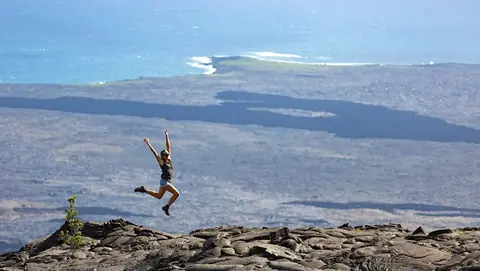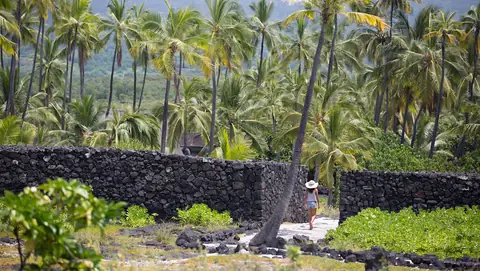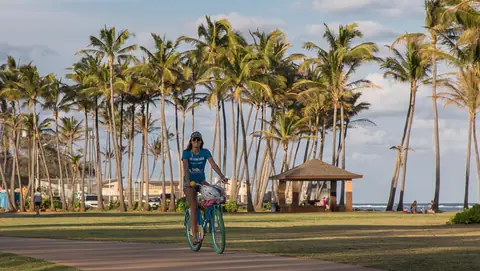

After Kauaʻi, we headed to Hawaiʻi, the biggest island, which everyone here calls the Big Island. I have lived on Maui since 2005 and I go back whenever I can: it is the island where you can go from white sand to snow to lava in a single day. Here is our week, day by day, exactly as I would do it again tomorrow.
Day 1: landing on the lava in Kona
Landing in Kona feels like touching down on the Moon: black lava fields as far as you can see, and an almost unreal blue sea beyond. We picked up the car, drove to the beaches north of town, and on the first evening ate grilled fish a few steps from the water while the sun sank into the Pacific. Jet lag did the rest: asleep before 9 p.m.
Day 2: swimming with manta rays
The next morning we took it slow: farmers market, coffee, a nap. The big moment comes at night. After dark the boat stops a few minutes off the coast, you slip into the water holding a lit-up board, and you wait. Then they arrive: manta rays several meters across, somersaulting right under your mask to catch the plankton drawn to the light. I have done it dozens of times and I still get the same shiver. It is the first thing our travelers tell us about when they get home.
Day 3: Kealakekua Bay and Kona coffee
Heading south to Kealakekua Bay, below the Captain Cook monument. Go by kayak or boat in the morning, when the water is calmest: the snorkeling is among the best in the islands, with coral, parrotfish and sometimes spinner dolphins. If you see them, enjoy them from a distance: federal law forbids swimming with them or approaching within 50 yards.
In the afternoon we drove up the slopes above the bay, where the famous Kona coffee grows. Several small family farms offer tours and tastings. We always leave with one bag too many in the suitcase.
Day 4: Kohala and Pololū Valley
North to the Kohala peninsula: pastures take over from the lava, ranches line the road, and you pass through the little town of Hāwī before reaching the Pololū lookout. Below you: a green valley, cliffs dropping into the ocean and a black boulder beach. You can hike down the steep, often muddy trail, or just sit and take it in. On the way back, stop in Waimea, home of the paniolo, the Hawaiian cowboys.
Day 5: sunset and stars on Mauna Kea
We left Kona for the other side of the island on Saddle Road, and treated ourselves to the wildest moment of the week: Mauna Kea. First stop is the Visitor Information Station at 9,200 feet, to acclimatize for at least 30 minutes. Above it the road is unpaved: you need a real 4WD, and most rental contracts forbid it. That is why I often suggest a guided tour, which provides the vehicle and warm clothes.
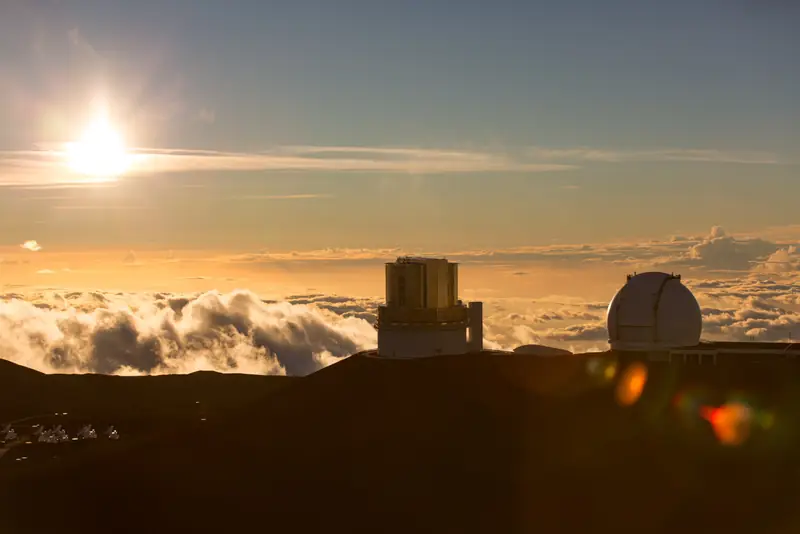
At the summit, 13,796 feet up, the sun sets over a sea of clouds between the observatory domes. The summit closes 30 minutes after sunset, so you come back down to the visitor station (open 9 a.m. to 9 p.m., free), where you actually see more stars than at the top. Children under 13 and pregnant women should not go above the visitor station, and you should wait 24 hours after scuba diving.
Day 6: Hilo and ʻAkaka Falls
Hilo is the anti-Kona: a small, rainy, green town that feels out of time, with old wooden storefronts and a fruit market where you can try rambutan and dragon fruit. North of town, on the Hāmākua coast, ʻAkaka Falls drops 442 feet into the jungle. A paved loop with steps leads there; entry is $5 per person and parking $10 per car, card only (open 8:30 a.m. to 5 p.m.).
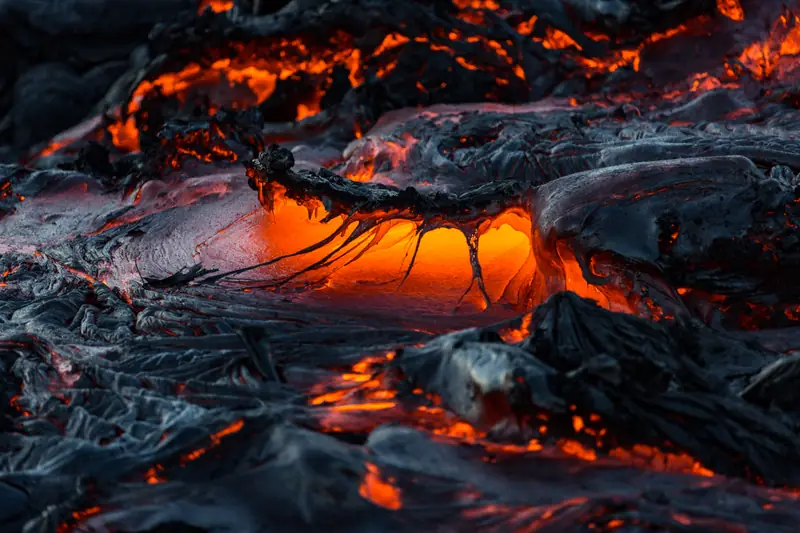
Day 7: Kīlauea volcano
A full day in Hawaiʻi Volcanoes National Park ($30 per car, valid 7 days). Walk along the crater, through a lava tube, then drive Chain of Craters Road down to the lava cliffs on the coast. Kīlauea has been erupting since December 23, 2024, in episodes: lava fountains that usually last less than a day, inside a closed area of the park, separated by pauses of several days or weeks. Nobody can promise you lava; check the USGS volcano observatory updates the day before. And if an episode is under way, come back after dark: the red glow in the night is unforgettable.
For this part of the trip I suggest staying in Volcano village, in a little cottage among the tree ferns: five minutes from the park, cool in the evening, sometimes with a real fireplace.
Day 8: black sand, green sand, and home
On the last day, head south. At Punaluʻu, green sea turtles often nap on the black sand beach: watch them from at least 10 feet away and never touch them. Further on, near South Point, the southernmost point in the United States, Papakōlea beach owes its olive-green color to a mineral called olivine; you reach it after a good hike in the sun, so bring plenty of water. Then drive up the coast to Kona for the evening flight, head full of stars.
My practical tips
- A car for the whole week: the Big Island is big (about two and a half hours between Kona and Hilo on Saddle Road), and public transport is almost nonexistent.
- Two bases, not one: Kona for the beaches and the ocean, then Hilo or Volcano for the volcano. It saves long back-and-forth drives.
- A fleece and a windbreaker: it can be near freezing on Mauna Kea and cool in Volcano, even when it is 85 °F at the beach.
- Manta rays and Mauna Kea: book these before you leave, spots go fast in high season.
FAQ
Is one week enough for the Big Island?
Yes, seven or eight nights let you see both sides of the island without rushing. With fewer than five nights you will have to choose between the ocean on the Kona side and the volcano on the Hilo side.
Can I drive a rental car up Mauna Kea?
Above the visitor station a 4WD is required, and many rental contracts forbid the drive. Check yours, or book a guided tour.
Will we see lava?
It is never guaranteed: Kīlauea erupts in short episodes inside a closed area of the park. Check the USGS updates right before your visit.
Want to live this week your own way, with your dates and your wishes? It has been our job since 2005: enter your dates and let’s talk it through.
Official sources (checked on November 3, 2026)
- USGS Hawaiian Volcano Observatory – Kīlauea updates (Nov. 3, 2026)
- NPS – Hawaiʻi Volcanoes National Park Fees & Passes
- UH Hilo – Maunakea Visitor Information Station
- UH Hilo – Visiting Maunakea safely (4WD, summit hours)
- DLNR Division of State Parks – ʻAkaka Falls State Park
- NOAA Fisheries – Viewing marine wildlife in Hawaiʻi
- NOAA Fisheries – Hawaiian spinner dolphin approach rule