
“Isn’t three weeks too long for Hawaii?” I have lived on Maui since 2005, and my answer never changes: it is the perfect amount of time to see the four main islands without rushing. Here is the road trip I recommend most often – 20 days, 19 nights, three inter-island flights and a rental car on every island – with everything you need to know for 2026.
Why three weeks, and why this order?
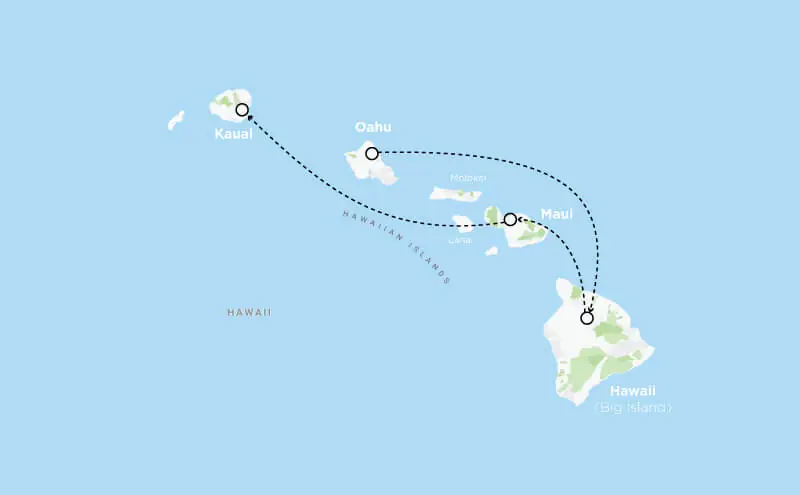
Every island change costs you half a day: return the car, fly, pick up another car. With fewer than four nights per island, you spend your holiday in airports. Three weeks gives you four or five nights on each of the four main islands, which is exactly how our The four islands of Hawaii trip is built.
Start on Oʻahu, where everything is easy, while your body adjusts to the time difference. Then come the volcanoes of Big Island, then Maui, and you finish on Kauaʻi – the greenest, most peaceful island, ideal for slowing down before the flight home.
Days 1–4: Oʻahu, from Waikīkī to the North Shore
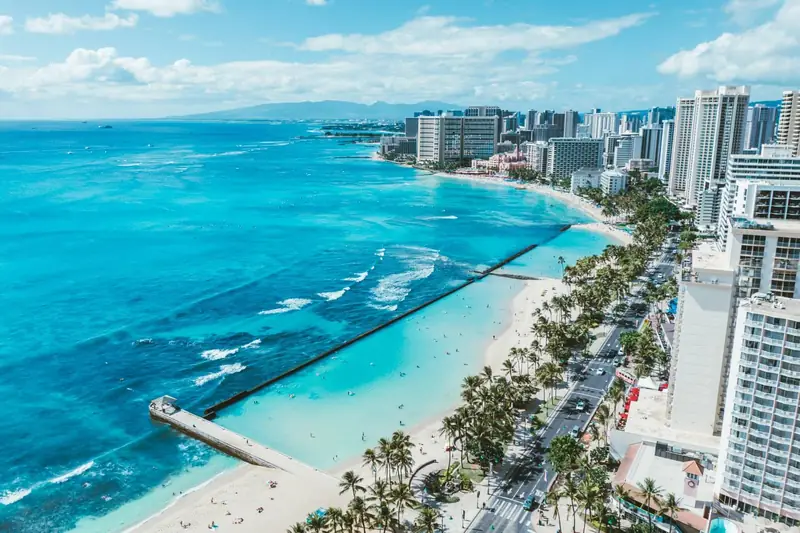
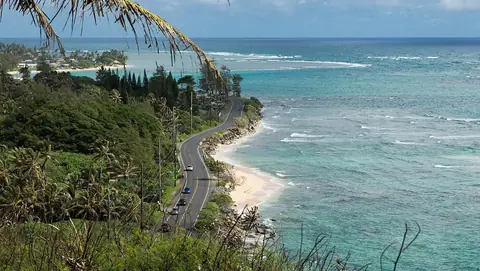
First evening: a stroll along Waikīkī Beach and an early night. Next morning, hike Diamond Head crater at sunrise – book up to 30 days ahead on the state parks website ($5 per person, $10 per car parked in the crater). Carry on along the east coast to Makapuʻu Lighthouse and the beaches of Kailua and Lanikai.
Keep one day for Pearl Harbor (the boat to the USS Arizona Memorial is booked on Recreation.gov, 8 weeks ahead) and another for the North Shore: the legendary waves of Waimea, Pipeline and Sunset, shrimp from a food truck, then the little town of Haleʻiwa. All the release dates are in our guide to every reservation to make before you go.
Days 5–9: Big Island, the volcano island
Fly into Kona and enjoy the white-sand beaches north of town. Don’t miss the night snorkel with manta rays – unforgettable – or kayaking and snorkeling in Kealakekua Bay. If you see spinner dolphins, admire them from afar: federal law prohibits swimming with them or approaching within 50 yards.
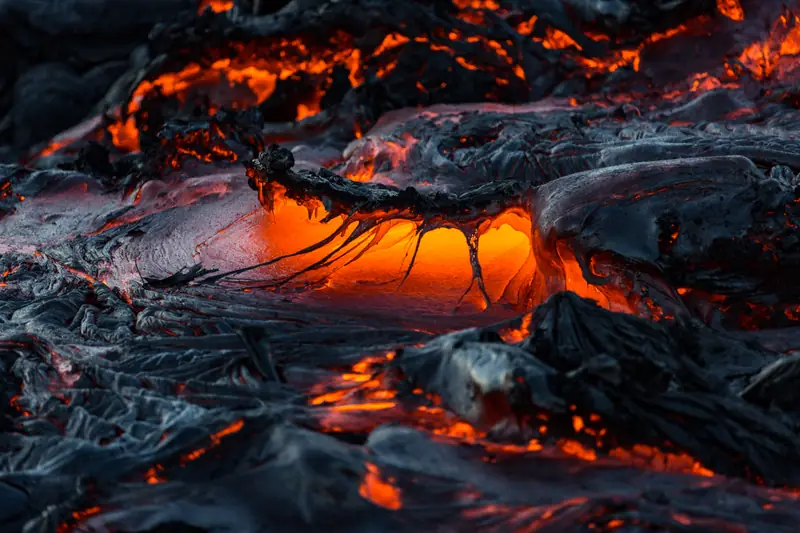
Then cross the island towards Hilo and ʻAkaka Falls, and spend a day in Hawaiʻi Volcanoes National Park ($30 per car). Kīlauea has been erupting in episodes since December 23, 2024: lava fountains that usually last less than 12 hours, separated by pauses of two weeks or more, all within a closed area of the park. Check the USGS volcano updates and the park website the day before. On your last day, head south to the green-sand beach and Punaluʻu’s black sand, where turtles rest (stay at least 10 feet away).
Days 10–14: Maui, our home island
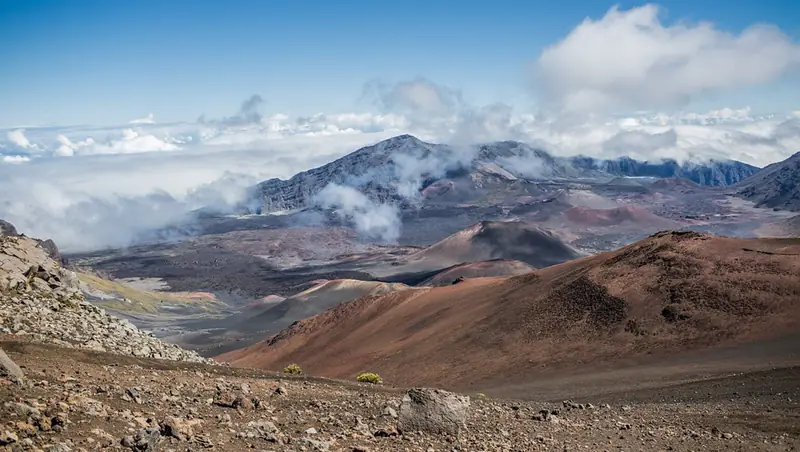
On Maui, you are on my home turf. From Kahului Airport, head to Baldwin Beach, then Hoʻokipa in the late afternoon for the turtles and windsurfers. For Haleakalā you have two options. Sunrise requires a reservation on Recreation.gov, released 60 days ahead at 7 a.m. Hawaii time, for $1 per car on top of the park entrance fee ($30, valid 3 days). Sunset needs no reservation, and I often prefer it: walk a little way down the Sliding Sands trail, then stay twenty minutes after sundown for the colors.
The Road to Hāna deserves a full day and an early start. For Waiʻānapanapa State Park and its black-sand beach, book your slot 30 days ahead, at midnight Hawaii time. Keep another day for West Maui and the Nakalele Blowhole, and a morning for La Pérouse Bay or a catamaran to Molokini.
Days 15–19: Kauaʻi, the Garden Isle

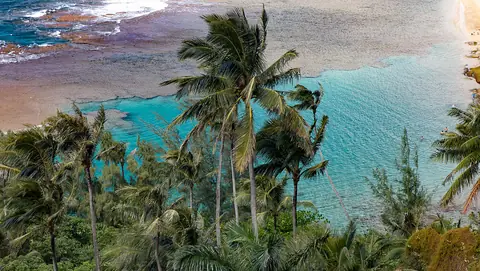
Kauaʻi is the gentle finale: Wailua Falls when you land in Līhuʻe, Poʻipū Beach in the south for snorkeling, Hanalei town and ʻAnini’s lagoon in the north. At the end of the North Shore road, Hāʻena State Park leads to Kēʻē Beach and the start of the Kalalau Trail, beneath the Nā Pali cliffs. Reservations open 30 days ahead at midnight Hawaii time; the shuttle from Hanalei is often the easiest option.
One important note this year: Hurricane Lowell hit Kauaʻi hard in September 2026. Hāʻena reopened on October 15, including the day hike to Hanakāpīʻai, but the Kalalau Trail is still closed beyond the two-mile mark. At Waimea Canyon only the first lookout reopened on October 24, and Kōkeʻe Road remains closed. Hotels, restaurants and activities are welcoming visitors again. I update this article as places reopen; check the state parks notices before each outing.
Day 20, inter-island flights and cars
On the last day you drop the car in Līhuʻe and fly home, full of memories. There is no ferry between these four islands, so you fly. Hawaiian Airlines operates most inter-island flights, Southwest also serves the main airports on a smaller schedule, and Mokulele links the small airports with nine-seat planes. On every island, a rental car is essential to travel at your own pace.
How much does this trip cost?
Our Four Islands of Hawaii trip costs $5,970 per person for two travelers and $4,090 per person for a family of four, excluding international flights. It includes 19 nights of accommodation, inter-island flights, the rental car, Pearl Harbor, the manta ray snorkel, the kayak and a day-by-day plan. International visitors also need an ESTA ($40.62 on the official site, esta.cbp.dhs.gov), and Hawaii’s state accommodation tax rose from 10.25% to 11% on January 1, 2026. For an estimate on your dates, try our trip calculator: you get a first proposal straight away.
FAQ
Is three weeks enough for four islands?
Yes – it is the right pace: four to five nights per island, so you enjoy each place instead of spending your days in transit. With only two weeks, I suggest three islands, as in our Beaches and Volcanoes trip.
Do I need a reservation for Haleakalā?
Only for sunrise (3 to 7 a.m.), on Recreation.gov. Sunset needs no reservation; you simply pay the park entrance fee.
Will I see lava?
It is never guaranteed: Kīlauea erupts in short episodes within a closed area of the park. Check the USGS updates just before your visit.
Want to adapt this itinerary to your dates, your interests or your kids? It has been our job since 2005: enter your dates and let’s talk it through.
Official sources (checked on November 2, 2026)
- NPS – Haleakalā Sunrise Reservations FAQ
- NPS – Haleakalā Fees & Passes
- NPS – Hawaiʻi Volcanoes National Park Fees & Passes
- USGS Hawaiian Volcano Observatory – Kīlauea updates (Nov. 1, 2026)
- Recreation.gov – USS Arizona Memorial tickets
- Hawaiʻi State Parks – Diamond Head State Monument
- DLNR – Diamond Head State Monument (fees)
- Hawaiʻi State Parks – Waiʻānapanapa State Park FAQ
- Go Hāʻena – Hāʻena State Park reservations
- DLNR – Hāʻena State Park reopening (Oct. 15, 2026)
- DLNR – Waimea Canyon Lookout reopening (Oct. 24, 2026)
- DLNR Division of State Parks – park notices
- Hawaiʻi Tourism Authority – travel alerts
- NOAA Fisheries – Viewing marine wildlife in Hawaiʻi
- NOAA Fisheries – Hawaiian spinner dolphin approach rule
- Tourism Maui – Lahaina travel guide
- Hawaiian Airlines – interisland flights
- Southwest Airlines – Hawaii interisland flights
- Mokulele Airlines
- CBP – Official ESTA website
- Hawaiʻi Dept. of Taxation – TAT changes (Act 96)